Skip to content
THE PROGRAM
The Deledda Master in Creative Writing & Translation is a two-year, low-residency graduate program designed to support sustained creative work within an international academic framework
The program combines intensive in-person residencies with long-term individualized mentoring, allowing students to develop their writing practice over time while remaining fully engaged in their professional and personal lives
Teaching is conducted in English and is guided by an internationally established faculty, coordinated by a Writer-in-Residence who ensures continuity, coherence, and academic depth across the curriculum
A Letter from the Director
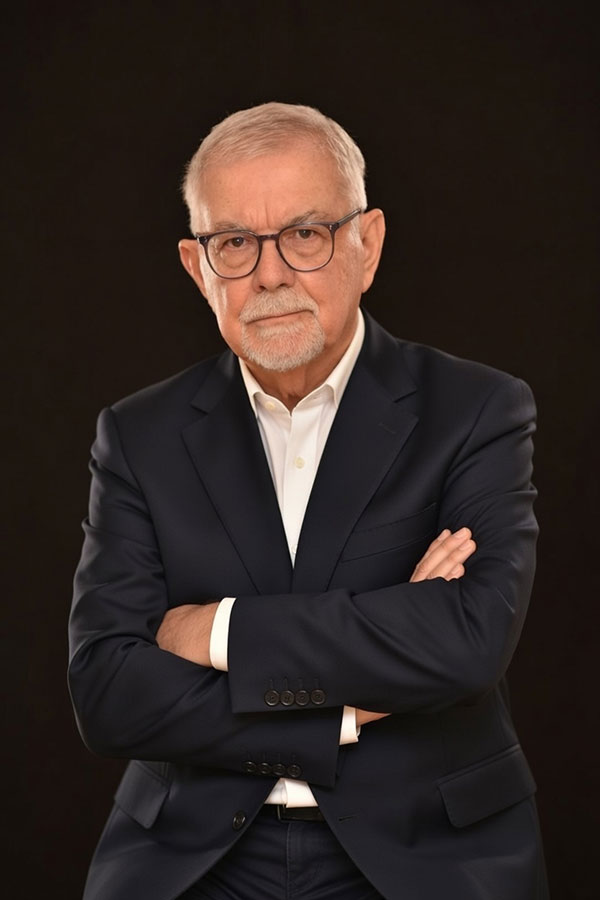
Dear Prospective Applicant,
Thank you for your interest in the Deledda Master in Creative Writing & Translation.
This program was founded on a clear conviction: writing is not merely a technique to be acquired, but a serious intellectual and artistic practice. Language carries history, silence, conflict, and memory. To write responsibly requires discipline, rigor, and sustained attention — both to craft and to oneself.
The Deledda Master is designed as a small, highly selective international program. Its strength lies in close mentorship and in the quality of its faculty: internationally established writers and translators with significant literary standing and experience in leading MFA and advanced writing programs worldwide. Their role is central to the structure of the Master. This is not symbolic affiliation, but active, engaged teaching.
We believe that serious creative development requires time, dialogue, and a community committed to depth rather than speed. For this reason, the program combines intensive residencies with structured one-to-one mentoring, ensuring continuity and intellectual coherence.
Sardinia offers a setting particularly suited to this work. Its cultural depth, historical stratification, and contemplative rhythm provide an environment where concentration is possible and artistic voices can mature. The Master brings together participants from different countries within a Mediterranean space of exchange and reflection.
If you are looking for sustained artistic growth within a rigorous international community, we welcome your application. I look forward to meeting those who are ready to undertake this work seriously.
Warm regards,
Ciriaco Offeddu
Director
Deledda Master in Creative Writing & Translation
Overall structure Master in Creative Writing
The program is structured around:
- intensive on-site residencies
- individualised distance mentoring
- a final creative thesis
Core areas of study:
- Fiction (short story and novel)
- Creative nonfiction (memoir, narrative nonfiction)
- Poetry
- Editing and revision techniques
- Voice, style, and artistic development
- Critical reading of contemporary and classic literary texts
On-site residencies:
- Writing and critique workshops
- Craft seminars and lectures
- Group discussions and readings
- Meetings with visiting writers
- Public readings and presentations
Distance study (mentorship):
- One-on-one mentoring with faculty writers
- Individualised study plans
- Regular submission and revision of creative work
- Development of a sustained creative project
Final thesis:
- A substantial creative work (novel, short story collection, memoir, poetry collection)
- Accompanied by a brief critical reflection on the creative process
Learning outcomes:
- Develop a mature and sustained writing practice
- Strengthen voice, style, and formal control
- Prepare students for professional literary and cultural paths
- Build international networks of writers, mentors, and peers
 ▶
▶
 ▶
▶
 ▶
▶
Overall structure Master in Literary Translation
The Translation track is designed to train literary translators capable of working in international contexts, with a strong focus on the relationship between writing and translation
Core areas of study:
- Theory and practice of literary translation
- Translation of fiction, poetry, and nonfiction
- Comparative textual analysis
- Voice, style, and fidelity
- Ethics and professional practice of translation
- Editing and revision of translated texts
On-site residencies:
- Translation workshops
- Case-study seminars
- Collective work on complex texts
- Meetings with professional translators and editors
Distance study:
- Individual mentoring
- Guided translation projects
- Progressive revision and refinement
Final thesis:
- A literary translation (or substantial excerpts)
- Accompanied by a critical introduction discussing translation choices
Learning outcomes:
- Train skilled and reflective literary translators
- Strengthen intercultural and linguistic competence
- Prepare students for international publishing contexts
 ▶
▶
 ▶
▶
 ▶
▶
THE LOW-RESIDENCY FORMAT
The low-residency model lies at the core of the program’s structure and pedagogy. This format provides both the intensity of collective learning and the continuity of individual guidance, supporting long-term creative development
In-Person Residencies
Held in Sardinia, these sessions are focused on workshops, seminars, lectures, and close interaction with faculty and peers. They serve as the anchor points of the academic year
Home-Based Semesters
During these periods, students work remotely under one-to-one faculty mentorship. This allows for sustained writing practice within the context of the student’s daily life
CREATIVE WRITING
The program is initially focused on creative writing, with an emphasis on fiction, non-fiction, poetry and related literary forms
Students work closely with faculty mentors to develop original work, refine their craft, and engage critically with contemporary literary practices. Workshops, readings, and seminars are designed to foster both experimentation and discipline


LITERARY TRANSLATION
Advanced Specialization. Literary translation is introduced as an advanced and specialized component of the curriculum upon the formation of a minimum cohort of two students
This progressive integration reflects the complexity of translation as a discipline and its growing importance within contemporary literary and cultural exchange. Translation pathways are intended for students who wish to deepen their engagement with language, authorship, and cross-cultural mediation
MENTORSHIP & ASSESSMENT
A defining feature of the program is its emphasis on individualized mentorship
During home-based semesters, students work one-to-one with assigned faculty mentors, receiving structured feedback, guidance, and critical support. Assessment is based on sustained creative development, participation in residencies, and the quality of the final thesis
Final Creative Thesis
The Master culminates in the submission of a creative thesis, developed under faculty supervision. The thesis may take the form of a substantial original work of creative writing or, where applicable, a translation project accompanied by critical reflection. It represents the integration of craft, vision, and sustained practice achieved during the program
ACADEMIC FRAMEWORK
The program is structured in alignment with international MFA standards while remaining fully compatible with European higher education frameworks
Academic credits are awarded in accordance with the regulations governing SSML San Domenico, a university-level higher education institution authorized by the Italian Ministry of Education, Universities and Research
Throughout the program, students become part of a small, international cohort that values dialogue, mutual critique, and intellectual exchange. The combination of low-residency structure, close mentorship, and a distinctive cultural setting creates an environment conducive to deep creative focus and long-term artistic growth